
ABA-VR E-LEARNING
ABA-VR E-LEARNING 4 Sections19 Lessons15 Quizzes10 Weeks
Lesson 2: Didactic Considerations of Using VR for Educational Purposes
Virtual reality as an educational tool
The use of VR as an educational tool offers new learning opportunities, but structured briefings and debriefings significantly enhance its effectiveness. The briefing before a virtual reality session prepares students by setting clear learning objectives, providing the necessary context, and familiarizing them with the virtual reality environment and tools. This preparation allows students to focus on the educational content instead of being distracted by the technology itself (Makransky & Lilleholt, 2018). Pre-experience instructions are particularly important when virtual reality simulates complex or high-risk scenarios, such as medical training or emergency response, where understanding the objectives and navigating the virtual space efficiently is crucial. Equally important is post-experience debriefing, where students can reflect on their actions, critically analyze the results, and discuss the broader implications of what they have learned. Debriefing helps solidify understanding by encouraging students to link virtual experience with theoretical concepts and real-world applications (Kolb, 1984).
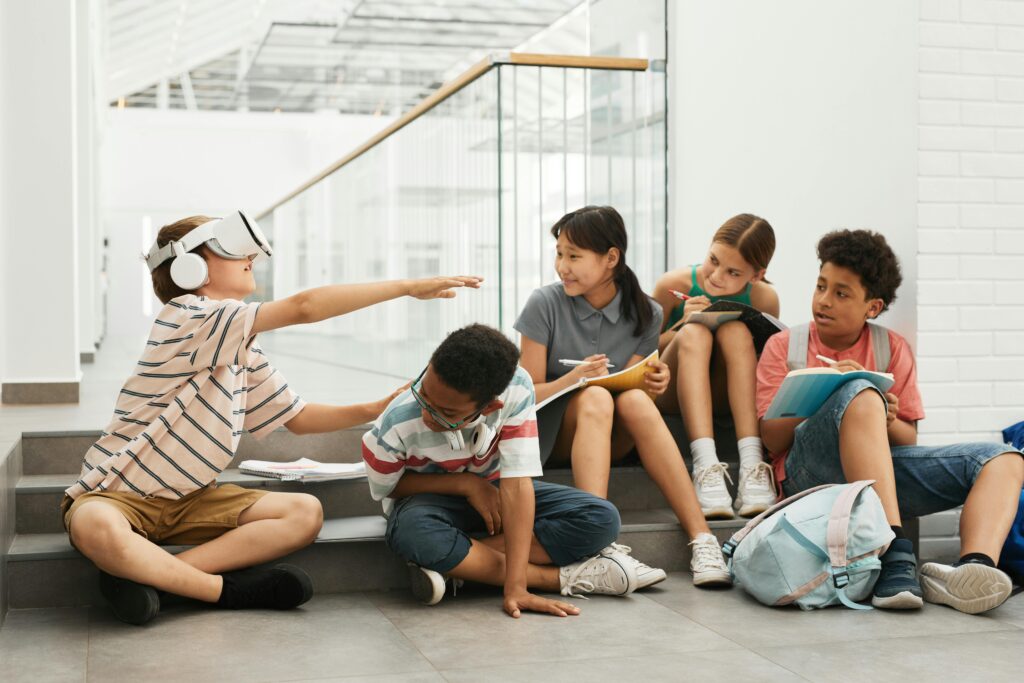
Foto de Norma Mortenson: https://www.pexels.com/es-es/foto/escaleras-gente-sentado-mirando-8457325/
Virtual reality also creates a “safe” learning environment that allows students to practice and explore without real-world risks. This is particularly valuable in fields such as aviation, medicine, or hazardous work environments, where real-world errors can have serious consequences. In virtual reality, students can practice procedures or experiment with different approaches, learn from their mistakes safely, and refine their skills without fear of failure or harm (Radianti et al., 2020). A sense of security fosters a more relaxed learning environment in which experimentation and problem-solving are encouraged, leading to deeper engagement and trust. Educators must carefully scaffold these experiences to maximize the benefits of learning, ensuring that students recognize that, despite the lack of real-world consequences, their actions within the virtual environment are meaningful. This holistic approach, which combines briefing, virtual reality safe space, and reflective debriefing, enhances both the effectiveness and depth of the learning experience.